
WAYS OF DEVELOPING STUDENTS' PRAGMATIC COMPETENCE IN FOREIGN LANGUAGE LESSONS
Article Sidebar
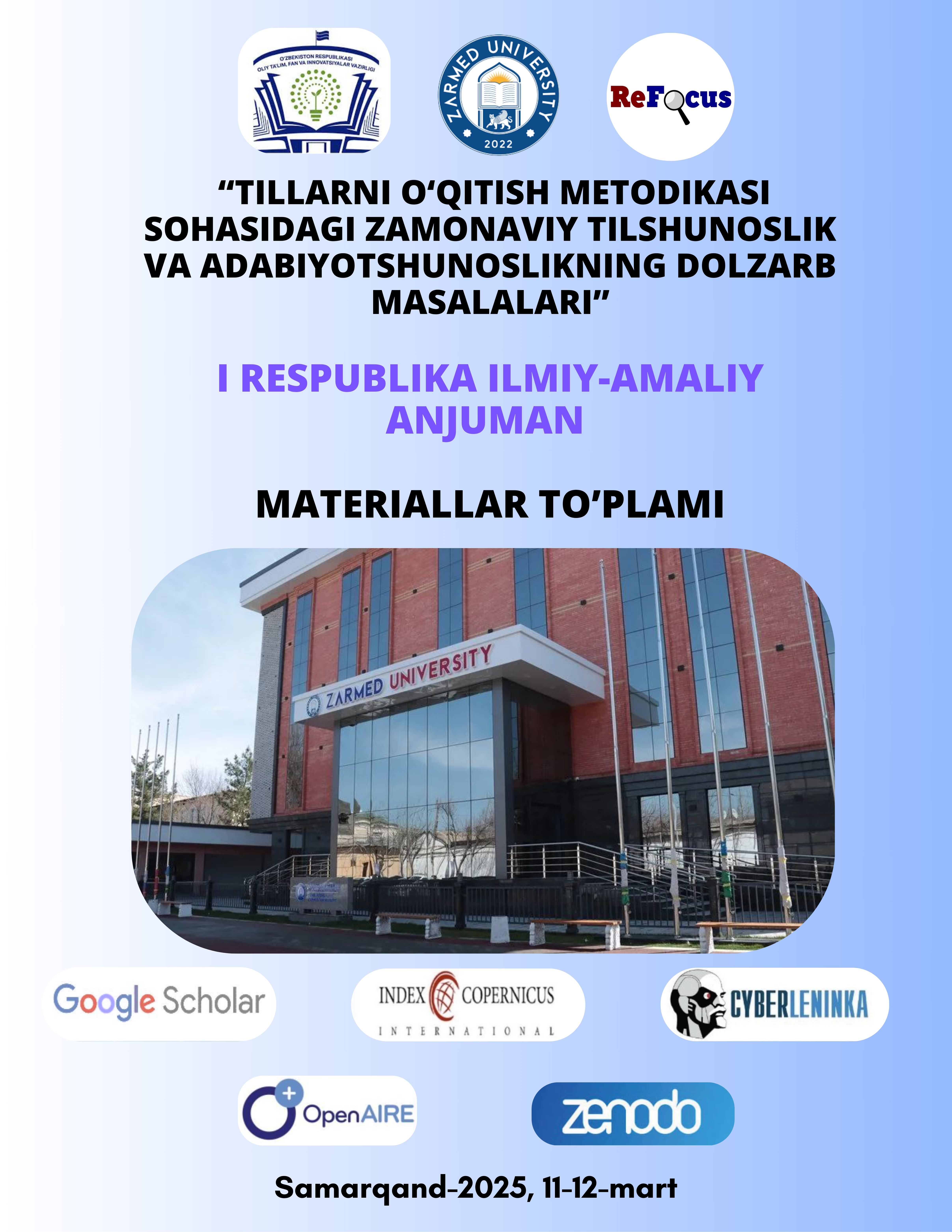
Main Article Content
Abstract
This article examines various methods and strategies for developing students' pragmatic competence in foreign language lessons. Pragmatic competence is the ability to use language correctly in different contexts, taking into account social norms, cultural practices and communicative intentions. The article discusses how language teachers can incorporate teaching methods that help to develop pragmatic skills, including communicative strategies, awareness of cultural difference and contextual language use. It also evaluates the role of authentic materials, technology and interactive activities in enhancing students' pragmatic competence. Studies show that a comprehensive, context-based approach can significantly increase students' effectiveness in real-world communication.
Article Details
Section

This work is licensed under a Creative Commons Attribution 4.0 International License.
How to Cite
References
Bardovi-Harlig, K., & Dörnyei, Z. (1998). Do language learners recognize pragmatic violations? Pragmatic versus grammatical awareness in instructed L2 learning. TESOL Quarterly, 32(2), 233-257. DOI: https://doi.org/10.2307/3587583
Kasper, G., & Rose, K. R. (2002). Pragmatics in language teaching. Cambridge University Press. DOI: https://doi.org/10.1017/CBO9781139524797.003
Taguchi, N. (2009). The development of pragmatic competence in Japanese as a foreign language. Multilingual Matters. DOI: https://doi.org/10.1515/9783110218558.1
Yule, G. (1996). Pragmatics. Oxford University Press.
House, J. (1996). Pragmatic aspects of English as a lingua franca. Studies in Second Language Acquisition, 18(2), 213-229. DOI: https://doi.org/10.1017/S0272263100014893
Thomas, J. (1983). Cross-cultural pragmatics: Questions and answers. Applied Linguistics, 4(2), 91-112. DOI: https://doi.org/10.1093/applin/4.2.91